Crispy Fried Chicken Coating: Build Better Texture
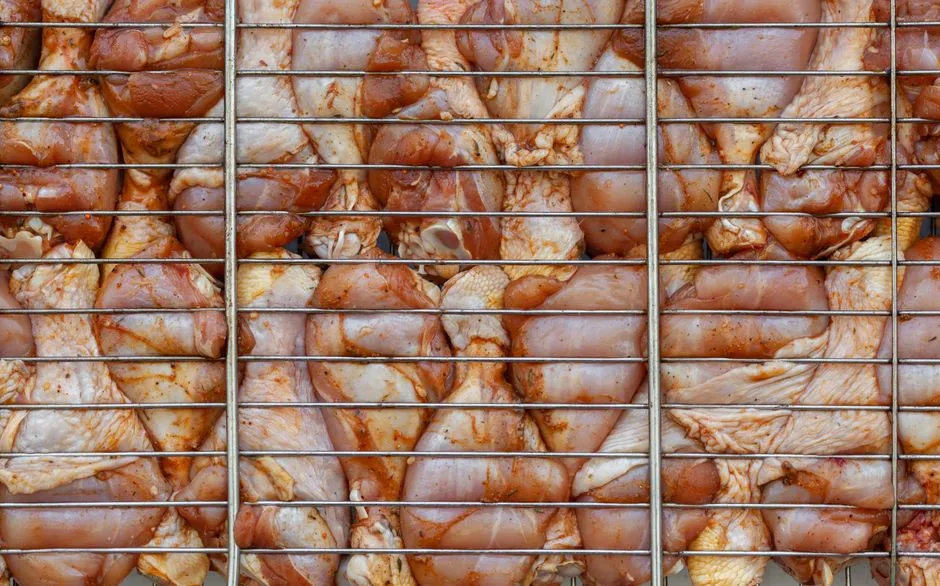
Crispy fried-chicken coating needs structure and roughness
A good coating attaches to the chicken, forms craggy edges, cooks through, and stays crisp long enough to reach the table. Build it with controlled surface moisture, seasoned dry ingredients, deliberate pressing, a short rest, stable oil, and open draining. “More flour” alone usually creates a thicker mystery rather than better crust.
Start with a tacky, not flooded, surface
Chicken coming from brine or buttermilk should lose its heavy drips. The surface needs enough moisture to hydrate flour but not so much that the dredge becomes a sliding paste. If using dry-brined chicken, a recipe may add egg, dairy, or another binder.
Keep raw chicken cold until breading and separate its station from cooked food. Flour is raw too; the FDA says not to taste uncooked flour, dough, or batter.
Build seasoned dry structure
Plain wheat flour produces a familiar crust. Starch or rice flour can change brittleness and color, while cornmeal adds a distinct coarse crunch. Use a tested ratio rather than replacing the entire flour bowl impulsively.
Whisk salt and spices evenly through the dredge before raw chicken enters. Reserve any finishing blend separately at the beginning. Never sprinkle cooked food with seasoning taken from a breading bowl that touched raw poultry.
For craggy flakes, drizzle a small amount of the seasoned wet mixture into the flour and rub it into irregular crumbs before dredging. Those hydrated clusters fry into extra edges. The bowl should still contain loose flour, not one ambitious dumpling.
Press, lift, and rest
Lay one piece in the dredge, cover it, press coating firmly around folds and edges, then lift and shake gently. Overhandling can polish away the rough texture. Place breaded pieces on a rack or tray without stacking.
A brief rest lets dry patches absorb surface moisture and helps the coating set. If flour remains stark white and dusty, dab with a little wet mixture and recoat. If the breading looks gummy, scrape away the excess and correct the wet-to-dry balance.
Read how to keep breading attached for the full troubleshooting sequence.
Fry without crowding
Lower pieces gently into controlled oil. Crowding drops temperature and increases bubbling, while repeatedly moving chicken can tear a crust that has not set. Let the first side firm before turning when using a pot method.
Maintain the recipe's temperature range and verify the chicken reaches 165°F (74°C) using the safe frying method. Dark crust does not prove the center is done, and a safe center does not rescue burned spices. Adjust piece size, heat, and batch load together.
Drain so steam can escape
Move finished chicken to a clean wire rack set over a tray. A flat paper-lined plate traps steam against the underside and can soften the crust. Do not pile hot pieces in a bowl or cover them tightly.
The cornmeal-crusted recipe demonstrates a coarser variation. Whichever formula you choose, crispness comes from the complete chain: surface, dredge, attachment, oil, doneness, and rest. The crust has many needs. Fortunately, none includes a secret handshake.