How to Drain Fried Chicken Without Softening It
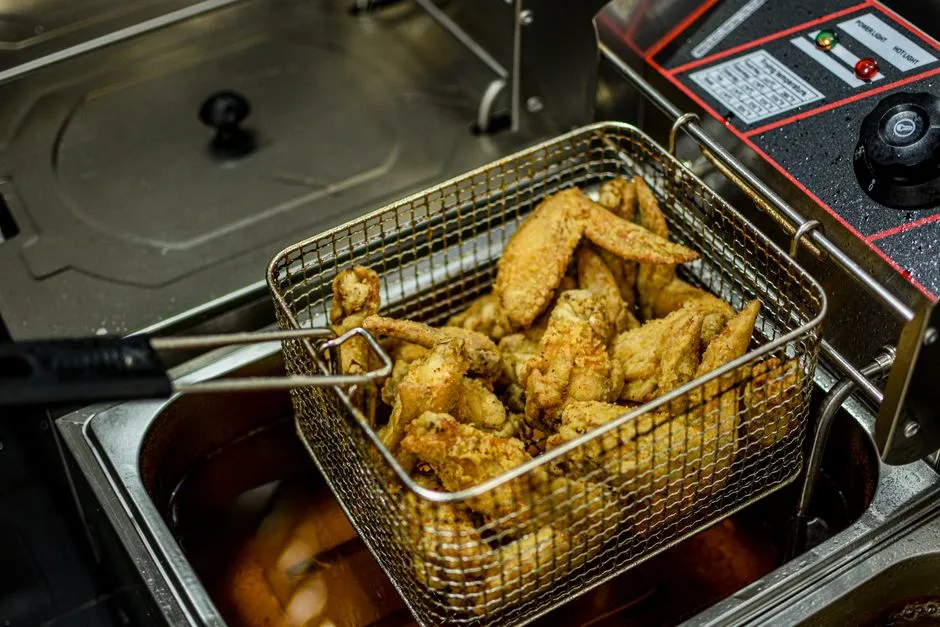
Drain fried chicken where steam can escape
Move cooked chicken to a clean wire rack set over a rimmed tray. The rack lets oil drip and air circulate beneath the crust. A flat plate lined with paper can trap steam against the bottom; a deep bowl or stacked platter traps even more. Crispness dislikes meetings.
Set up the rack before heating oil. Trying to find one while holding hot chicken encourages unsafe travel across the kitchen.
Keep the draining station clean and stable
Use a rack and tray that did not hold raw poultry. Place them on a heat-resistant, level surface away from the fryer, but close enough that you do not carry dripping chicken far. Keep handles and cords out of walking paths.
Transfer pieces with dry, heat-safe tools. Let excess oil drain over the vessel briefly without hovering your hand above hot oil, then move the piece to the rack. Do not shake aggressively; crust that just set can still tear.
Arrange one open layer
Leave space between pieces. Put large bone-in portions where they will not crush wings or strips. If one rack is insufficient, use another rather than building a fried-chicken apartment complex.
Airflow matters most during the first minutes, when hot chicken releases steam. Do not cover tightly. If you need to protect food from the environment, use a setup that maintains safe temperature and airflow according to a tested service plan.
Season from a clean reserved bowl
If the recipe uses a finishing salt or spice, reserve it before raw chicken enters the workstation. Apply it while the crust is hot enough to catch fine seasoning. Never use seasoning from the contaminated dredge bowl.
For sauced chicken, decide whether crispness or full coating matters more. Toss immediately for maximum absorption or serve sauce separately to preserve crust longer. A double-fried crust may tolerate sauce differently from a delicate flour coating.
Verify doneness before serving
Draining does not finish undercooked chicken safely. Remove representative pieces from oil and verify at least 165°F (74°C) in the thickest edible part. If a piece is below temperature, return it carefully to the oil or follow a validated finishing method.
Keep temperature-checked cooked chicken separate from any piece with unknown doneness. Clean the thermometer probe between uses according to its instructions.
Hold briefly, not indefinitely
If batches must wait, an oven-safe rack in a warm oven may help maintain crust, but the exact holding temperature and time require a tested recipe and suitable equipment. Excessively hot holding can dry chicken; a cool counter eventually becomes a food-safety issue.
USDA guidance says leftovers should be refrigerated within two hours of frying, or within one hour when the surrounding temperature is above 90°F (32°C). Do not interpret “the party is still going” as refrigeration technology.
Reheat on a rack or open basket
Chill leftovers in suitable shallow containers after the initial steam has been managed, following current food-safety guidance. For later service, the reheating guide uses an oven or air fryer to restore airflow around the crust.
The complete sequence is simple: clean rack, short drip, one layer, clean seasoning, verified doneness, prompt service. Good draining cannot fix every frying error, but poor draining can soften a beautiful crust with astonishing efficiency.